Top 10 Gay Films That Had a Lasting Cultural Impact
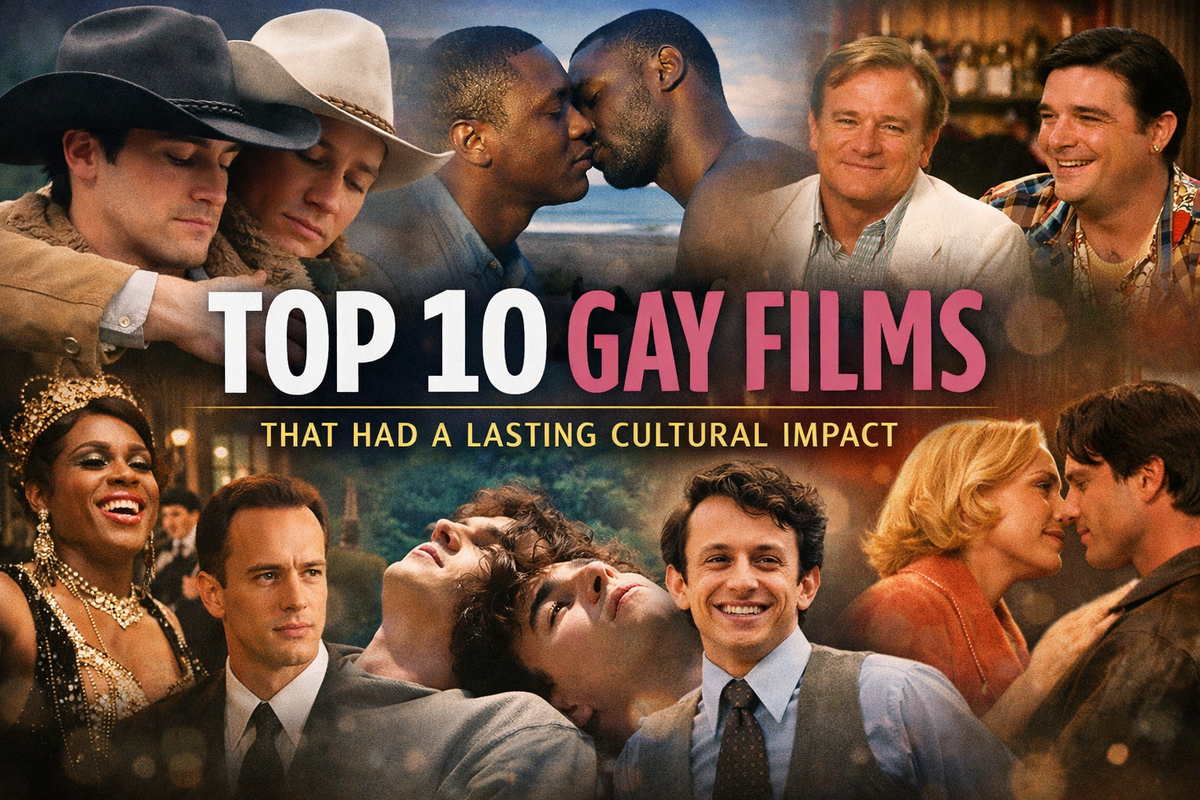
Film has always been one of the most powerful tools for shaping public perception. For gay audiences, cinema has done more than reflect reality - it has often created it, offering language, visibility, and validation long before those things existed in everyday life.
The following ten films didn’t just feature gay characters or themes. They shifted culture, influenced how stories could be told, and changed what mainstream audiences were willing to engage with. This list is intentionally G-rated in presentation: focused on cultural impact, representation, and legacy rather than explicit content.
1. Brokeback Mountain (2005)
When this film was released, it challenged one of the most deeply ingrained stereotypes in cinema: that same-sex love stories were niche, unserious, or destined for art-house obscurity. By placing a gay romance inside the familiar framework of a sweeping American drama, it reached audiences who might never have sought out an LGBTQ+ film.
Beyond awards and box office success, its real impact was emotional. Viewers were confronted with the quiet devastation caused by repression, social pressure, and fear.
Why it mattered:
It forced gay love into the cultural mainstream and made ignoring it impossible.
2. Moonlight (2016)
This film redefined what a gay coming-of-age story could look like. Rather than centring conflict around sexuality alone, it explored identity as something shaped by environment, masculinity, and emotional survival.
Its restrained storytelling stood in contrast to louder, more dramatic portrayals of queerness, proving that subtlety could be just as impactful — if not more so.
Why it mattered:
It expanded the emotional vocabulary of gay cinema and challenged who gets to be seen as vulnerable.
3. Paris Is Burning (1990)
Part documentary, part cultural archive, this film preserved New York ballroom culture at a moment when it was largely invisible to the outside world. The language, fashion, and attitude captured here later filtered into mainstream pop culture — often without credit.
Decades on, it remains a reference point for understanding queer subcultures and chosen family.
Why it mattered:
It documented a community on its own terms before history had the chance to erase it.
4. Milk (2008)
This film connected personal identity with public action, showing that progress doesn’t happen in isolation. Rather than presenting activism as abstract or heroic, it grounded change in ordinary people organising, disagreeing, and persisting.
It also arrived at a time when LGBTQ+ political visibility was still uneven across the world.
Why it mattered:
It reinforced the idea that visibility and representation are inseparable from rights and participation.
5. Call Me By Your Name (2017)
Unlike many earlier gay love stories, this film did not centre its narrative on punishment, shame, or tragedy. Instead, it treated first love as something gentle, formative, and universally recognisable.
Its tone resonated strongly with younger audiences who were hungry for stories that didn’t frame queerness as a problem to be solved.
Why it mattered:
It showed that gay stories can be tender and life-affirming without losing depth.
6. The Birdcage (1996)
Comedy has often been one of the safest entry points for social change, and this film used humour as its Trojan horse. Beneath its farce was a clear message about authenticity, family, and acceptance.
For many viewers, this was their first exposure to openly gay characters who were confident, flawed, and central to the story.
Why it mattered:
It made acceptance feel familiar rather than confrontational.
7. Philadelphia (1993)
Released during the AIDS crisis, this film humanised a conversation that had been dominated by fear, stigma, and misinformation. It framed discrimination as a moral issue rather than a distant social problem.
While cautious by modern standards, its timing amplified its importance.
Why it mattered:
It helped shift public empathy during a period of widespread misunderstanding.
8. Carol (2015)
Set in the 1950s, this film resisted sensationalism entirely. Instead, it focused on longing, restraint, and emotional connection, treating its central relationship with quiet dignity.
Its visual style and pacing reinforced the idea that queer love stories belong comfortably alongside classic romantic cinema.
Why it mattered:
It reframed queer romance as timeless rather than transgressive.
9. My Own Private Idaho (1991)
This film blurred the line between narrative cinema and art-house experimentation. Its fragmented structure mirrored the instability experienced by its characters, resonating with audiences who felt similarly adrift.
It also demonstrated that queer cinema could be formally ambitious without sacrificing emotional truth.
Why it mattered:
It legitimised gay film as serious artistic expression, not just representation.
10. Weekend (2011)
Minimalist and deeply personal, this film focused on conversation, connection, and fleeting intimacy. There were no grand statements — just two people navigating honesty and vulnerability.
Its influence can be seen in the wave of naturalistic queer storytelling that followed.
Why it mattered:
It proved that small, everyday moments can leave a lasting cultural imprint.
